Crafting Depth and Light: A Guide to the Easter Scene 3D Shadow Box SVG
Hello, crafters. The intersection of traditional paper artistry and modern digital cutting technology has opened a world of possibilities for creators ranging from hobbyists to professional designers. Among the most captivating projects in this realm is the layered paper shadow box. Specifically, the Easter Scene 3D Shadow Box SVG represents a perfect fusion of seasonal thematic elements and advanced crafting techniques. This article explores the intricacies of working with this specific design format, offering a comprehensive look at its structure, material requirements, assembly methods, and the diverse applications that make it a standout project for spring.
Understanding the Layered Architecture
At the heart of any successful shadow box project is the understanding of depth. Unlike flat papercutting, a 3D shadow box relies on the strategic stacking of multiple layers to create an illusion of three-dimensionality. The template in question features seven distinct layers. This number is critical; it provides enough separation to generate significant depth without making the final assembly too bulky or unstable.
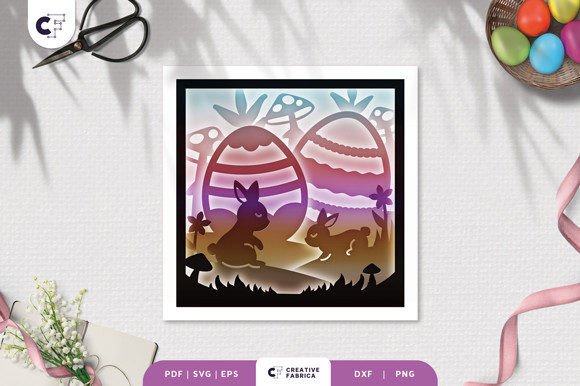
Each layer in the Easter Scene 3D Shadow Box SVG serves a specific visual function. The rearmost layer typically acts as the background, setting the tone and color palette. As you move forward through the stack, intermediate layers introduce mid-ground elements such as foliage, eggs, or architectural details like fences and arches. The foremost layer captures the primary focal points, often featuring bold silhouettes that frame the scene. When light passes through or hits these staggered planes, shadows are cast from one layer to the next, enhancing the perception of distance and volume.
The design is engineered as a square template with dimensions of 20.32×20.32 cm (approximately 8x8 inches). This square aspect ratio is particularly versatile for framing and display. It is important to note that while SVG files can be resized to fit different frames or project needs, you must maintain the same aspect ratio. Distorting the width or height independently will misalign the registration marks and ruin the 3D effect, causing elements that should overlap to drift apart.
File Formats and Machine Compatibility
One of the greatest advantages of purchasing a digital template like this is the versatility offered by the file formats included. The package typically contains SVG, PDF, EPS, PNG, and DXF files. This wide array ensures compatibility with virtually every tool in a crafter's arsenal.
- SVG (Scalable Vector Graphics): This is the preferred format for users of electronic cutting machines such as Silhouette Cameo, Cricut Explore, and Cricut Maker. The vector data allows the machine to read precise cut lines, ensuring clean edges even on intricate details.
- DXF: Often used as a backup for older software versions or specific industrial plotters, this format also provides vector precision.
- PDF and EPS: These are ideal for professional printing services or users who prefer to print the templates out and cut them manually. They preserve the vector quality, meaning the image remains sharp regardless of scaling.
- PNG: While not a cut file, the high-resolution PNG is invaluable for previewing the design, creating mockups for clients, or using in sublimation projects where a cut path is not required.
For those without access to automated cutting machines, the design is fully adaptable for hand-cutting. Using a sharp art knife or a pair of precision scissors, crafters can trace the patterns from the PDF printout onto their chosen cardstock. While this method requires more time and a steady hand, it offers a tactile connection to the craft that many find rewarding.
Material Selection and Paper Weight
The success of a 3D shadow box is heavily dependent on the materials used. The structural integrity of the piece relies on the paper's ability to hold its shape and support the weight of the layers above it without sagging. For this specific project, the recommended material is Encore Cardstock 80 lb cover (216 gsm).
This specific weight is chosen for a reason. Lighter papers, such as standard printer paper or 65 lb cardstock, may buckle under the tension of adhesives or fail to cast distinct shadows. Conversely, paper that is too thick can be difficult to cut, especially on home cutting machines, and may add excessive bulk to the frame. The 80 lb cover stock strikes a balance, offering rigidity for the spacers while remaining pliable enough for detailed cutting.
Color selection is another creative decision point. While the preview images provide a guide, the actual final product color may vary slightly due to lighting sources and the specific paper brand used. Crafters are encouraged to experiment with monochromatic schemes for a sophisticated, subtle look, or vibrant, contrasting colors to emphasize the festive nature of Easter. Using textured paper can also add an additional layer of visual interest, catching light differently than smooth finishes.
Assembly Techniques and Adhesives
Assembling a seven-layer shadow box is a process that demands patience and precision. The primary goal is to create uniform spacing between each layer to maximize the shadow effect. This is achieved using spacers, which can be strips of the same cardstock, foam tape, or specialized mounting squares.
When adhering the layers, glue or double-sided tape is essential. Liquid glue should be applied sparingly to avoid warping the paper or leaving visible residue. Double-sided tape, particularly foam tape, is often preferred because it simultaneously bonds the layers and creates the necessary elevation. For the Easter Scene 3D Shadow Box SVG, consistency is key. If one corner has a thicker spacer than the others, the layers will not sit parallel, distorting the perspective of the scene.
The assembly order generally proceeds from back to front. Start by attaching the background layer to the base or frame backing. Apply spacers to the designated areas (often indicated in the cut file or instructions), then carefully align the next layer. Use tweezers for placing small, intricate pieces to ensure they sit flat. Repeat this process until all seven layers are stacked. The final result should be a cohesive unit where the eye travels naturally from the foreground to the background.
Illumination: Transforming Decor into a Light Box
While a standard framed shadow box is beautiful in ambient light, integrating illumination transforms the project into a glowing centerpiece. The hollow spaces created between the seven layers of the Easter Scene 3D Shadow Box SVG provide the perfect channel for installing LED strips.
To create a light box effect, battery-operated LED strip lights can be adhered to the inner sides of the frame or directly onto the spacer blocks between layers. Warm white LEDs tend to enhance the cozy, nostalgic feel of Easter, while cool white or colored LEDs can create a more modern or whimsical atmosphere. The light filters through the cutouts, highlighting the silhouette details and casting dynamic shadows that change as the viewer moves. This application is particularly effective for nightlights, mantle displays, or window decorations where backlighting from the sun can achieve a similar stained-glass effect during the day.
Versatile Applications and Gifting
The utility of this digital template extends far beyond a single craft project. Because the file formats are editable and scalable, the design serves various purposes for different types of creators.
- Home Decor: As mentioned, these make stunning framed wall decorations for living rooms, nurseries, or entryways. The square format fits standard frames easily, allowing for quick customization of home interiors for the spring season.
- Gifting: A handmade shadow box is a deeply personal gift. Whether for a friend, family member, or someone special, the time and effort invested in cutting and assembling seven layers convey a level of care that store-bought items cannot match. They serve as memorable keepsakes that can be brought out year after year.
- Educational Projects: For educators teaching art or geometry, this project offers a practical lesson in depth, perspective, and layering. Students can learn about vector graphics by manipulating the SVG files before cutting.
- Business Products: Small business owners who sell handmade goods can use this template to create inventory for Easter markets. The ability to produce consistent, high-quality designs using a cutting machine allows for efficient scaling of production.
Technical Considerations and Best Practices
When working with the Easter Scene 3D Shadow Box SVG, there are several technical nuances to keep in mind to ensure a professional finish. First, always perform a test cut on a scrap piece of your chosen cardstock. This verifies that your machine's blade depth and pressure settings are correct for the 80 lb cover stock. Cutting too deep can damage your mat, while cutting too shallow will result in torn edges.
Secondly, pay attention to the "weeding" process—the removal of excess paper from the cut design. With seven layers of intricate details, small negative spaces can be tricky to remove. Using a weeding tool or a pin can help lift these small pieces without tearing the surrounding design.
Finally, consider the framing. To preserve the 3D depth, a deep-set frame or a shadow box frame with significant depth (at least 1.5 to 2 inches) is required. A standard flat picture frame will crush the layers, destroying the 3D effect. If building a custom box, ensure the interior is painted or lined with a dark color to prevent light reflection from washing out the shadows, unless a bright, illuminated look is the specific goal.
In conclusion, the Easter Scene 3D Shadow Box SVG is more than just a digital file; it is a blueprint for creativity. Whether utilized by a seasoned professional with a fleet of cutting machines or a beginner with a pair of scissors and some glue, the potential for creating something beautiful is immense. By understanding the layering mechanics, selecting the right materials like the recommended 216 gsm cardstock, and exploring lighting options, crafters can produce a timeless piece of art that celebrates the spirit of the season.