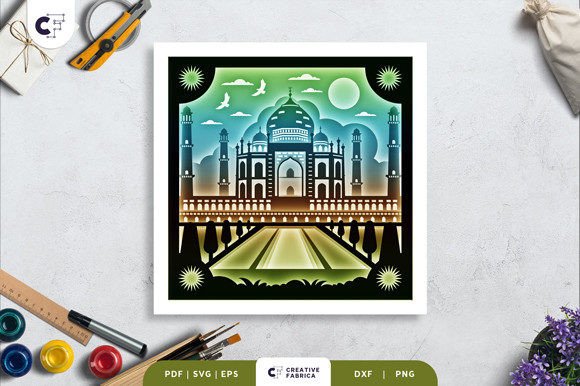
Crafting Depth: A Practical Look at the Taj Mahal India 3D Shadow Box Template
Hello, crafters. In the evolving landscape of paper arts, the shift from flat die-cuts to dimensional layering represents a significant leap in visual storytelling. Among the various architectural subjects available for digital cutting, the Taj Mahal India 3D Shadow Box stands out as a rigorous test of precision and a rewarding project for those seeking to elevate their home decor or product offerings. This layered, square paper cutting template is not merely a design file; it is a structured system for creating depth, light, and shadow using standard cardstock.
For professionals and serious hobbyists alike, understanding the technical specifications and practical applications of such a template is essential before committing time and materials. This analysis breaks down the utility, quality, and potential outcomes of working with this specific seven-layer design.
Technical Specifications and File Versatility
The foundation of any successful papercraft project lies in the quality of the source file. This particular template is delivered in a comprehensive suite of formats: SVG, PDF, EPS, PNG, and DXF. This variety ensures compatibility across a wide spectrum of hardware and software ecosystems. Whether you operate a Silhouette Cameo, a Cricut Maker, or utilize industrial-grade plotters, the SVG inclusion guarantees that vector paths are recognized correctly for clean cuts. For those without access to electronic cutting machines, the high-resolution PNG and PDF options allow for manual tracing and cutting with art knives or scissors, though this naturally increases production time and requires a steady hand.
The design consists of seven distinct layers, each contributing to the overall illusion of three-dimensionality. The total dimensions are set at 20.32 × 20.32 cm (approximately 8 × 8 inches). This square format is intentional, providing a balanced canvas that fits standard deep-frame shadow boxes readily available in craft stores. A critical feature for scalability is the ability to resize the SVG files. However, users must maintain the original aspect ratio to prevent distortion of the architectural details, which are intricate and reliant on proportional accuracy.
Material Considerations and Structural Integrity
The success of a multi-layered shadow box is heavily dependent on the substrate used. While the digital file provides the geometry, the physical result relies on the cardstock. For optimal results, it is recommended to use heavy-weight paper, specifically Encore Cardstock 80 lb cover (216 gsm). This weight class offers the necessary rigidity to hold its shape when spaced apart, preventing the layers from bowing or collapsing under their own weight or due to humidity changes.
Lighter papers may fail to create the desired separation between layers, causing the "shadow" effect to diminish. Conversely, materials thicker than 80 lb may prove difficult for some desktop cutters to blade through cleanly, potentially requiring multiple passes that can degrade edge quality. Assembly requires an adhesive strategy; glue or double-sided tape is essential. Foam adhesive squares are often preferred by experienced crafters to ensure consistent spacing between the seven layers, which is crucial for the light to penetrate and cast shadows effectively.
Click here to visit 12×12 Cardstock Shop for suitable materials. This is a paid link at no extra cost to you, offering a direct resource for sourcing the specific weight and texture required for this project.
Design Execution: From Wall Art to Illuminated Display
The versatility of the Taj Mahal India 3D Shadow Box allows for two primary presentation styles, each serving different aesthetic goals. The first is a traditional framed wall decoration. When assembled with contrasting paper colors—for instance, varying shades of cream, gold, or soft pastures against a dark background—the layers create a sophisticated relief map of the monument. This approach works well in well-lit rooms where natural light casts dynamic shadows throughout the day.
The second, and perhaps more impactful application, is converting the assembly into a light box. By integrating LED strips between the layers during assembly, the translucent nature of the cardstock (especially if lighter colors are chosen) allows light to diffuse through the cutouts. This technique highlights the negative space and intricate filigree work characteristic of Mughal architecture. The interplay of light and the seven layers produces a glowing, ethereal effect that transforms the piece into a functional lamp or a striking nightlight. This dual functionality increases the item's value as a gift or a sellable product for small business owners.
Evaluating Workflow and Production Efficiency
From a workflow perspective, this template is designed for efficiency but demands attention to detail. The seven-layer structure means that for every single finished unit, the crafter must cut, weed (if necessary), and align seven separate pieces. For a hobbyist making a single gift for a friend or family member, this process is meditative and manageable. However, for entrepreneurs looking to scale production, the layer count presents a bottleneck.
Consistency in alignment is paramount. If the layers are even slightly askew during gluing, the symmetry of the Taj Mahal—a structure renowned for its perfect balance—is compromised. Therefore, the use of registration marks or a jig during assembly is highly recommended for anyone producing these in batches. The reliability of the cut files is generally high, provided the machine settings are calibrated for the specific cardstock weight. Users should always perform a test cut on a scrap piece of the actual material to verify blade depth and pressure before committing to the full design.
Ideal Use Cases and Audience Fit
Who benefits most from this asset? The Taj Mahal India 3D Shadow Box is particularly well-suited for:
- Educators and Cultural Programmers: It serves as an excellent hands-on project for teaching geometry, symmetry, and cultural history.
- Small Business Owners: The high perceived value of 3D paper art allows for healthy profit margins when sold as bespoke home decor or personalized gifts.
- Interior Design Enthusiasts: The piece adds texture and depth to walls without the permanence of paint or wallpaper.
- Event Planners: These boxes can be adapted as centerpieces or decorative elements for themed events, particularly those with an Indian or travel motif.
It is less suitable for absolute beginners who have never handled a craft knife or adhesive foam, as the margin for error decreases with each added layer. Additionally, those seeking a quick, five-minute craft will find the assembly time prohibitive.
Realistic Expectations and Limitations
While the digital preview images showcase vibrant colors and perfect lighting, it is important to manage expectations regarding the final physical product. As noted in the product documentation, the actual final product color may slightly vary due to lighting sources and the paper color. The images provided are for preview purposes only. The tactile reality of paper means that texture, grain, and the specific hue of the cardstock batch will influence the outcome. Furthermore, the effectiveness of the shadow effect is entirely dependent on the depth of the frame used; a shallow frame will compress the layers, negating the 3D intent.
Long-term value is tied to preservation. Paper is susceptible to fading if exposed to direct sunlight for extended periods and can be damaged by moisture. For wall hangings intended to last years, framing behind UV-protective glass is a prudent investment.
Final Verdict on Utility and Design
The Taj Mahal India 3D Shadow Box template represents a robust resource for the modern crafter. It balances artistic complexity with technical accessibility. The inclusion of multiple file formats removes barriers to entry regarding equipment, while the seven-layer depth offers a professional finish that surpasses standard flat cuts. Its strength lies in its adaptability; it functions equally well as a quiet, elegant wall piece or a luminous focal point when backlit.
For those willing to invest the time in precise cutting and careful assembly, the result is a high-quality decorative object that honors the architectural beauty of the subject matter. Whether utilized for personal satisfaction, educational demonstration, or commercial resale, this template provides a solid foundation for creative expression in the realm of paper engineering.