Crafting Depth: A Practical Guide to the Halloween Pumpkin Shadow Box - 3 Layers
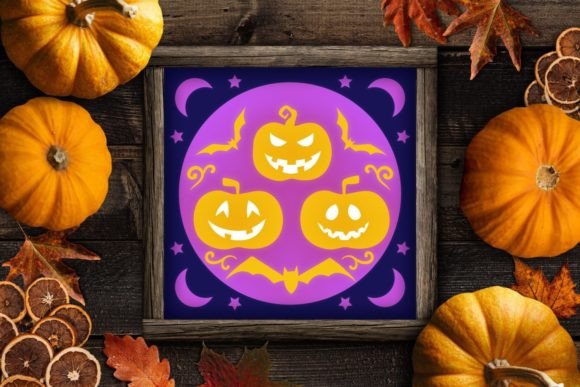
Integrating seasonal decor into a home or business environment requires more than just placing an object on a shelf; it demands a thoughtful approach to composition, lighting, and spatial dynamics. The Halloween Pumpkin Shadow Box - 3 Layers represents a sophisticated intersection of traditional holiday motifs and modern papercraft engineering. Unlike flat silhouettes that rely solely on surface appeal, this design utilizes depth to create a narrative scene. Featuring a prominent pumpkin silhouette accompanied by bats, stars, and moon ornaments, the piece is designed to evoke a specific atmospheric tone. However, the true value of this asset lies not just in its visual output but in how it fits into a broader creative workflow, whether for a hobbyist looking to optimize their crafting time or a small business owner curating a seasonal product line.
Understanding the mechanics of the Halloween Pumpkin Shadow Box - 3 Layers is the first step in effective implementation. The design is structured around three distinct foreground and mid-ground layers that stack to create parallax and dimensionality. Crucially, the system also requires a separate background layer to complete the illusion of depth. This separation of elements is not merely aesthetic; it is a functional requirement that dictates how the project is assembled, lit, and displayed. For creators, this modular approach offers flexibility. You are not locked into a single color scheme or material type. Instead, you can treat each layer as an independent variable in your production process, allowing for customization based on available resources or specific brand guidelines.
Strategic Planning and Material Preparation
Before cutting the first sheet of cardstock, successful execution begins with planning. The Halloween Pumpkin Shadow Box - 3 Layers functions best when treated as a multi-stage project rather than a spontaneous activity. This mindset shift is essential for professionals and serious hobbyists who value efficiency and quality control. The preparation phase involves selecting materials that interact correctly with light. Since the design relies on shadows cast by the layered elements, the opacity and texture of your chosen paper or vinyl will directly impact the final outcome.
When sourcing materials, consider the compatibility of your media with your cutting tools. Whether you are using a digital die-cutting machine for batch production or a precision knife for a one-off art piece, the intricacy of the bat and star ornaments requires sharp blades and stable mats. The pumpkin silhouette, often the largest and most central element, acts as the anchor. If this layer warps or fails to adhere properly, the structural integrity of the entire box is compromised. Therefore, organizing your workspace to handle these layers sequentially prevents confusion and reduces waste. Labeling layers immediately after cutting ensures that the assembly process remains streamlined, a practice that is vital for anyone managing multiple projects simultaneously.
The Critical Role of the Background Layer
A common oversight in shadow box construction is neglecting the background. In the context of the Halloween Pumpkin Shadow Box - 3 Layers, the background is not merely a backdrop; it is the canvas upon which the lighting effects are painted. The design specifications explicitly state that a background layer is needed, and its selection determines the mood of the piece. A deep black background will maximize the contrast of the cut-out shapes, creating a stark, dramatic effect suitable for spooky themes. Conversely, a gradient orange or twilight purple can soften the scene, making it more inviting for family-friendly displays.
From a workflow perspective, the background layer should be prepared last among the static elements but installed first in the physical assembly. This ensures that any adhesive residue or alignment adjustments do not damage the delicate foreground details. For educators teaching papercraft techniques, emphasizing the importance of the background provides a valuable lesson in composition and negative space. It teaches students that what is not cut is just as important as what is removed. Furthermore, the background offers an opportunity for additional customization, such as adding subtle textures or glitters that catch the light differently than the matte finish of the primary layers.
Assembly Techniques and Structural Integrity
Once the components are prepared, the assembly phase focuses on maintaining consistent spacing between the layers. The "3 Layers" designation implies a specific depth ratio that must be preserved to achieve the intended visual effect. Using foam tape or specialized spacer strips is the industry standard for this task. These spacers not only hold the layers apart but also create the void necessary for shadows to form. When implementing the Halloween Pumpkin Shadow Box - 3 Layers, consistency in spacer height is key. Uneven spacing can distort the perspective, making the bats appear to float at odd angles relative to the moon and pumpkin.
Efficiency in assembly can be greatly improved by creating a jig or template if you are producing multiple units. Small business owners and entrepreneurs selling seasonal decor can benefit significantly from this approach. By standardizing the distance between the pumpkin silhouette and the bat ornaments, you ensure product uniformity, which is critical for brand reputation. Additionally, paying attention to the order of operations during assembly prevents the trapping of dust or fibers between layers, which can be difficult to remove once the box is sealed. A clean, dust-free interior is a hallmark of high-quality craftsmanship and enhances the clarity of the shadow play.
Lighting Integration and Display Optimization
The final variable in the equation is light. A shadow box is a dynamic medium that changes appearance based on its illumination source. The Halloween Pumpkin Shadow Box - 3 Layers is designed to interact with ambient light, but for maximum impact, dedicated lighting should be considered. LED strips placed along the inner edges of the frame or a small spotlight positioned above the box can dramatically enhance the depth of the pumpkin and the flight path of the bats. For marketers and bloggers showcasing this project, documenting the difference between natural and artificial lighting provides valuable content that demonstrates the versatility of the design.
Placement within a room or retail space also affects performance. The shadow box should be positioned where it can catch directional light without suffering from glare that obscures the details. In a home setting, this might mean placing it on a mantle near a window or on a side table with a lamp. For commercial displays, strategic lighting can draw the eye and create a focal point in a crowded visual field. Understanding these environmental factors allows users to integrate the shadow box seamlessly into their existing decor strategies, ensuring it enhances rather than clutters the space.
Long-Term Utility and Storage
Beyond the immediate satisfaction of creation, considering the lifecycle of the project is part of a mature creative process. The Halloween Pumpkin Shadow Box - 3 Layers is a durable asset if constructed with archival-quality materials. However, seasonal items often face long periods of storage. Proper organization during disassembly or packing is essential to prevent damage to the delicate spacer connections and the intricate cut-outs of the stars and moons. Storing the box flat and protected from humidity ensures that the layers remain distinct and the paper does not warp over time.
For those who view crafting as a continuous learning activity, revisiting this design in future years offers opportunities for iteration. You might experiment with different color palettes, swap the pumpkin for a different silhouette while keeping the bat and moon elements, or scale the project up for a larger installation. The modular nature of the three-layer system supports this adaptability. It serves as a foundational template that can be expanded upon, making it a sustainable choice for long-term creative development. By treating the shadow box as a flexible component of your seasonal workflow rather than a disposable decoration, you maximize its value and utility year after year.
In conclusion, the Halloween Pumpkin Shadow Box - 3 Layers is more than a festive ornament; it is a case study in layered design and practical execution. From the initial selection of materials to the final placement of the background layer, every step contributes to the overall efficacy of the piece. Whether you are a professional designer optimizing a production line or a hobbyist seeking a meaningful weekend project, approaching this craft with a process-oriented mindset yields superior results. By respecting the mechanics of depth, lighting, and structure, you transform simple paper cuts into a captivating display of Halloween magic that stands out in any setting.