Evaluating the Christmas Tree Shadow Box: A Guide to 3 SVG Layers and Layered Holiday Decor
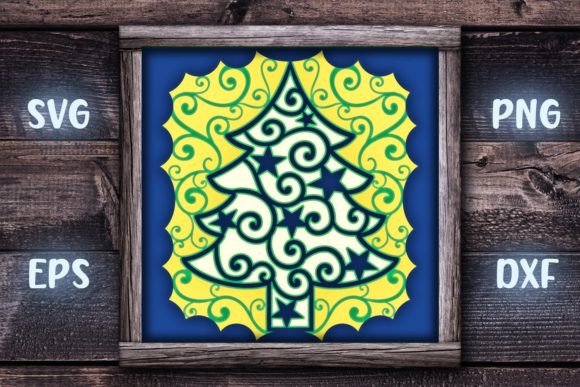
Holiday crafting often involves a choice between speed and depth. While flat vinyl decals and single-layer cut files offer quick results, they sometimes lack the dimensional quality that makes handmade decor feel special. The Christmas Tree Shadow Box - 3 SVG Layers represents a middle ground in this spectrum, offering a structured approach to creating depth without requiring the complex engineering of a full multi-tiered diorama. This design typically features a central Christmas tree motif surrounded by decorative swirls and stars, distributed across three distinct foreground and mid-ground layers, with a separate background layer required to complete the assembly.
For crafters evaluating whether this specific file format suits their upcoming projects, understanding the mechanics of layered SVGs is essential. Unlike a standard silhouette where all elements are cut from a single sheet of material, a shadow box design relies on spacing—either through foam tape, spacers, or a pre-made deep frame—to create physical distance between the layers. When light hits these separated planes, it casts actual shadows, enhancing the perception of depth and bringing a touch of winter magic to the home in a way flat designs cannot.
Structural Distinctions of the Three-Layer Approach
The defining characteristic of the Christmas Tree Shadow Box - 3 SVG Layers is its specific segmentation of visual elements. In many similar designs, artists might combine all decorative elements into one complex cut or split them into just two layers (background and foreground). However, the three-layer structure introduces a crucial mid-ground. Typically, the rearmost layer contains the background elements or the base silhouette of the tree, the middle layer holds the primary tree structure and larger swirls, and the front layer features the stars and finest details.
This segmentation offers a significant advantage in material usage and visual clarity. By separating the stars and swirls from the main tree body, crafters can use different materials for each layer to enhance contrast. For instance, one might choose a dark green cardstock for the tree layer, a metallic gold for the star layer, and a textured patterned paper for the background. This level of customization is harder to achieve with single-layer files where all elements must share the same material properties. Furthermore, the inclusion of a dedicated background layer requirement means the crafter has full control over the "sky" or backdrop color, allowing the piece to match specific room decor rather than being limited to the default white of a cutting mat or frame backing.
Comparative Analysis: Shadow Boxes vs. Flat Decals and Intricate Mandalas
When researching holiday decor options, it is helpful to compare the shadow box approach against other popular categories. Flat decals and single-layer signs are undoubtedly faster to produce. They require no assembly beyond weeding and transferring, making them ideal for last-minute gifts or high-volume production. However, they lack the tactile engagement of a shadow box. If the goal is to create a focal point on a mantle or a gift that feels substantial, the flat option may appear too simple.
On the other end of the spectrum are intricate mandala ornaments or 10+ layer dioramas. These projects offer stunning detail but come with a steep learning curve and significant time investment. Aligning ten tiny layers requires precision tools and patience; a slight misalignment in the third layer can ruin the symmetry of the whole piece. The Christmas Tree Shadow Box - 3 SVG Layers sits comfortably between these extremes. It provides enough complexity to look professional and dimensional but remains manageable for intermediate crafters. The three-layer limit reduces the risk of alignment errors while still delivering the coveted 3D effect.
Another comparison point is the pop-up card format. While pop-up cards also utilize layering, they are designed for interaction and folding mechanisms. Shadow boxes are static displays intended for framing. If the end goal is wall art or shelf decor, the shadow box format is superior because it utilizes standard deep-frame dimensions (often 1.5 to 2 inches deep) which are readily available at craft stores, whereas pop-up mechanisms require custom folding and structural engineering.
Practical Considerations and Material Tradeoffs
Choosing to work with the Christmas Tree Shadow Box - 3 SVG Layers involves specific material considerations that differ from standard cutting projects. The most critical factor is the choice of adhesive and spacing. To achieve the intended shadow effect, the layers must not touch. Crafters typically use double-sided foam tape or silicone bumpers between layers. This adds a variable cost and a step in the assembly process that does not exist with flat projects.
Material weight is another tradeoff. Because the design includes hanging elements like stars and swirling branches, using heavy cardstock (80lb or higher) is often necessary to prevent sagging, especially if the frame will be hung vertically. Lighter papers might warp over time or fail to hold the rigid structure needed for clean shadows. Conversely, using materials that are too thick, such as chipboard, might make the three layers exceed the depth of a standard shadow box frame. Therefore, evaluating the thickness of the chosen media against the depth of the intended frame is a vital pre-project step.
Additionally, the "swirls and stars" mentioned in the design description introduce delicate cut points. In a single-layer design, a thin swirl might be fragile. In a layered design, these delicate parts are supported by the layers behind them, increasing durability. However, this also means weeding (removing excess material) requires care to avoid tearing these fine connections before assembly.
Ideal Use Cases and Decision Factors
So, when is this specific design the right choice? The Christmas Tree Shadow Box - 3 SVG Layers is an excellent candidate for crafters looking to elevate their portfolio without overwhelming their schedule. It is particularly well-suited for:
- Personalized Gifts: The separate background layer allows for easy customization. A crafter can swap the background for a family name, a date, or a specific patterned paper that matches the recipient's home decor, adding a personal touch that mass-produced items lack.
- Home Decor Accents: For those decorating a entryway or mantel, the dimensional aspect catches light differently throughout the day, providing dynamic visual interest compared to static prints.
- Learning Depth Techniques: For beginners who have mastered basic cutting and want to try layering, this three-layer structure serves as a perfect training ground. It teaches spacing and alignment without the frustration of overly complex assemblies.
However, there are scenarios where this might not be the optimal solution. If a crafter is producing items for a busy holiday market stall where speed is the primary metric, the assembly time for layering three separate pieces plus the background may reduce profit margins. In such cases, a simplified single-layer version of the same tree design might be more pragmatic. Similarly, if the user does not have access to deep frames or the patience for precise spacing, the final result may look cluttered rather than dimensional, negating the purpose of the SVG's structure.
Assembly Tips for Optimal Results
To maximize the potential of the Christmas Tree Shadow Box - 3 SVG Layers, attention to the assembly sequence is paramount. Before applying any adhesive, it is highly recommended to perform a "dry fit." Place the background in the frame, then loosely position the subsequent layers to check for alignment and ensure the stars and swirls do not obscure the main tree trunk unintentionally.
Lighting plays a subtle but powerful role in these projects. When placing the finished shadow box, consider the light source. A design with swirls and stars will cast intricate shadows that change as the sun moves or as indoor lighting shifts. Placing the frame opposite a window or under a directional spotlight can accentuate the depth created by the three layers. Conversely, flat, diffuse lighting may minimize the shadow effect, making the piece look flatter than intended.
Ultimately, the decision to use this design comes down to the desired balance between effort and aesthetic impact. The Christmas Tree Shadow Box - 3 SVG Layers offers a refined, professional look that bridges the gap between simple crafts and complex art. By understanding the layering requirements, material needs, and comparative advantages, crafters can determine if this winter-themed design aligns with their skills and project goals, ensuring the final piece brings genuine warmth and dimension to their holiday celebrations.